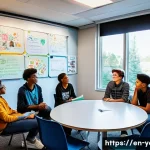
Ever feel like the world is changing at warp speed? Our young people today face a whirlwind of new challenges, from navigating complex digital landscapes to preparing for jobs that don’t even exist yet.
It’s no longer enough to just memorize facts; they need to think on their feet, innovate, and find truly creative solutions. That’s where amazing youth mentors step in – they’re not just teaching; they’re sparking genuine curiosity and nurturing that vital spark of creative problem-solving.
I’ve seen firsthand how a well-designed program can literally transform a shy participant into a confident innovator, equipping them for a future where adaptability and original thought aren’t just buzzwords, but survival skills.
Let’s get into the nitty-gritty and find out exactly how we can make this happen!
Mentorship: Igniting the Spark of Innovation in Young Minds

Beyond Textbooks: Fostering Curiosity and Exploration
Let’s be real, the world isn’t a multiple-choice test anymore. Our young people are stepping into a future that demands more than just rote memorization; it calls for genuine curiosity and a drive to explore.
I’ve personally seen how a great mentor can utterly transform a passive learner into an active explorer. Think about it: when someone truly listens to your ideas, even the wild ones, and encourages you to dig deeper, that’s when the magic happens.
It’s about creating a safe space where asking “why” isn’t just allowed, it’s celebrated. This kind of environment, where questions are welcomed and every idea, no matter how unconventional, gets a moment in the spotlight, is what truly cultivates an innovative mindset.
I remember working with a mentee who was convinced she wasn’t “good at science.” After a few sessions where we just explored her personal interests – she loved animals – and how they connected to scientific principles, her whole outlook shifted.
Suddenly, science wasn’t a rigid set of facts, but a fascinating puzzle related to the creatures she adored. That’s the power of nurturing curiosity; it connects learning to their world, making it meaningful and exciting.
When young people are encouraged to question the status quo and explore unfamiliar territories with confidence, it paves the way for breakthroughs, big or small.
From Ideas to Impact: A Mentor’s Role in Creative Problem-Solving
It’s one thing to have a brilliant idea, but quite another to turn it into something tangible and impactful. This is where the mentor truly shines, guiding young people through the sometimes messy, often challenging, but always rewarding process of creative problem-solving.
In my experience, it’s less about giving direct answers and more about equipping them with the tools to find their own. This means helping them break down complex problems into smaller, manageable pieces, and encouraging them to brainstorm multiple solutions rather than settling for the first one that comes to mind.
I once mentored a high school student who wanted to create an app to help local farmers. The initial idea was, frankly, a bit too ambitious for a solo project.
Instead of shutting it down, we broke it into phases, focusing on a minimal viable product first. I helped him connect with a local farmer to understand real needs, and we talked through different design options.
Seeing him iterate, fail, learn, and finally launch a simple yet effective prototype was incredibly rewarding. That process built his confidence not just in tech, but in his ability to tackle real-world challenges.
Mentors act as role models, offering a practical roadmap that enables their mentees to navigate complex projects, take risks, and push boundaries.
Crafting Connections: The Heart of Effective Youth Mentorship
Building Trust and Cultivating Meaningful Relationships
You know, I’ve found that the absolute cornerstone of any successful mentorship is building genuine trust. It’s not just about showing up; it’s about being *present* and creating a safe space where a young person feels completely comfortable being themselves, flaws and all.
Think about it from their perspective – they’re often navigating a lot of uncertainty, and having a consistent, reliable adult who genuinely cares can make all the difference.
I always start by really listening, like, *truly* listening, without judgment. When a mentee knows you’re in their corner, it opens up a world of honest communication and vulnerability.
I’ve had mentees who initially barely spoke a word, slowly open up and share their biggest fears and wildest dreams, simply because they felt heard and respected.
This kind of strong connection isn’t just nice to have; it’s essential for helping them develop self-esteem and confidence. It’s about being that consistent, encouraging voice that says, “I believe in you, even when you don’t believe in yourself.”
Equipping Mentors: Skills for Lasting Impact
Becoming a great mentor isn’t just innate; it’s a skill set that needs to be developed and refined. While a good heart is a starting point, effective mentors possess a specific toolkit that allows them to truly make an impact.
From my own journey, I’ve learned that patience and understanding are paramount, as is the ability to give constructive feedback without crushing a young person’s spirit.
It’s a delicate balance, right? You want to challenge them to grow, but you also need to build them up. Active listening is another critical one; sometimes a mentee just needs to vent, and being there to absorb their thoughts without immediately jumping to solutions is a powerful act of support.
I always advise new mentors to focus on fostering a positive mindset and teaching goal-setting. It’s incredibly empowering for young people to learn how to break down big dreams into achievable steps.
And let’s not forget the importance of cultural sensitivity and open-mindedness; our young people come from such diverse backgrounds, and a mentor needs to be ready to meet them where they are.
From Vision to Reality: Designing Programs that Deliver
Structuring for Success: Program Design Best Practices
You know, having a great mentor is one thing, but designing a program that consistently connects young people with those transformative relationships?
That’s a whole other ballgame. I’ve poured over countless program designs, and what truly stands out are those built on a foundation of “best practices.” It’s not about a one-size-fits-all approach; it’s about guidelines that allow for adaptation and innovation within unique contexts.
We’re talking about things like careful mentor recruitment and screening – because not just anyone can be a great mentor, right? Training is absolutely critical, ensuring mentors understand their role, how to set boundaries, and how to effectively communicate and support their mentees.
Then there’s the art of matching – pairing mentees with mentors based on shared interests, personalities, or even skill sets can make a huge difference in how quickly that crucial trust builds.
I’ve seen programs thrive when they consider ongoing support for both mentors and mentees, offering resources and check-ins that keep the relationships healthy and productive.
It’s about creating an entire ecosystem where positive connections can flourish.
Measuring What Matters: Evaluating Program Impact
Okay, so we’ve got awesome mentors and well-designed programs, but how do we know they’re actually working? That’s where impact measurement comes in, and it’s something I’m super passionate about.
It’s not just about showing off good numbers; it’s about understanding what’s effective and where we can do better. We look at a blend of quantitative outcomes, like improved academic achievement or higher college enrollment rates, alongside qualitative experiences, such as increased self-confidence or better decision-making skills.
Think about it – if a program is truly making a difference, you should see it reflected in their school attendance, their ability to resolve conflicts, and even how they interact with their families.
We use surveys, interviews, and focus groups, consistently gathering feedback from both mentors and mentees. This holistic approach helps us paint a clear picture of success and identify areas for adjustment, ensuring we’re always improving.
It’s so vital to show stakeholders, from funders to parents, the tangible benefits of these initiatives. It validates the hard work and helps secure future support.
Beyond Boundaries: Real-World Experiences and Adaptability
Bridging the Gap: Connecting Youth with Opportunities
Let’s face it, getting real-world experience can be a huge hurdle for many young people. That’s where a mentor truly becomes a bridge, connecting their mentees with incredible opportunities they might never have found on their own.
I’ve seen mentors introduce teens to career fairs, volunteer gigs, and even networking events that literally changed the trajectory of their lives. It’s about expanding their horizons beyond what they see in their immediate environment.
Mentors often leverage their own networks to open doors, whether it’s for an informational interview, a job shadowing opportunity, or even just a conversation with someone in a field that sparks their interest.
This kind of exposure is invaluable. It helps young people see what’s possible, understand different career paths, and build those crucial connections that will serve them well into adulthood.
I still remember the excitement in a mentee’s voice when he landed his first internship, all because his mentor made a phone call. It wasn’t about a handout; it was about a hand up.
Adaptability: The Ultimate Future-Proofing Skill
The world is always changing, and if there’s one skill I believe every young person absolutely needs, it’s adaptability. It’s the superpower that allows them to navigate uncertainty, embrace change, and bounce back from setbacks with resilience.
In my time, I’ve seen how quickly industries shift and how new challenges emerge. Young people who are adaptable aren’t just surviving; they’re thriving.
This means being flexible in their thinking, open to new ideas, and able to adjust their plans when things don’t go exactly as expected. I once worked with a mentee who was devastated when her dream college program was suddenly cut.
Instead of dwelling on it, we brainstormed alternative paths, researching similar programs and even considering a gap year. Her ability to pivot, to not let that setback define her, was truly inspiring.
That’s adaptability in action. It’s about cultivating a growth mindset, where failures are seen as learning opportunities, not dead ends. It’s a skill that empowers them to think critically, analyze situations from different angles, and generate innovative solutions no matter what life throws their way.
Fostering Innovative Environments: Practical Steps for Mentors

Embracing Project-Based Learning and Gamification
When I’m looking to really spark that creative fire, I often turn to project-based learning. It’s brilliant because it moves beyond the typical classroom stuff, allowing mentees to take real ownership of their learning.
We identify something they’re genuinely interested in, and then we build a project around it. It could be anything from designing a community garden to coding a simple app.
The key is that they’re researching, exploring, and showcasing their newfound knowledge in a way that feels authentic to them. This approach makes learning fun and relevant, which, let’s be honest, is half the battle with young people!
I also love incorporating a bit of gamification into our sessions. Setting learning goals that come with points, or creating friendly challenges, can really boost engagement.
It turns learning into an adventure, with rewards tailored to their individual preferences – maybe it’s tickets to a local sporting event, or even just some dedicated time for a shared hobby.
This makes the whole experience more engaging and encourages them to stick with it, even when things get tough.
Cultivating a Culture of Openness and Experimentation
To truly foster innovation, we need to create environments where young people feel safe to experiment, to try new things, and yes, even to fail gracefully.
In my experience, a mentor’s role here is crucial. It’s about building a culture of openness where ideas can be freely shared, discussed, and refined without fear of judgment.
I always emphasize that mistakes aren’t roadblocks; they’re valuable learning opportunities. We talk about famous inventors who failed countless times before their big breakthrough – it helps them put their own struggles into perspective.
Providing constructive feedback is a cornerstone of this, focusing on specific behaviors and offering actionable ideas for improvement, all while maintaining a positive and encouraging tone.
Encouraging diversity of thought and collaboration is also vital. When young people learn to work together, bringing different perspectives to the table, that’s when truly innovative solutions emerge.
It’s about creating a dynamic space where curiosity is celebrated, and pushing boundaries is the norm.
The Mentor’s Blueprint: Developing Essential Skills for Connection
The Art of Active Listening and Empathetic Engagement
I’ve found that one of the most underrated, yet powerful, skills a mentor can possess is truly active listening. It’s more than just hearing words; it’s about fully understanding and empathizing with what a young person is communicating, both verbally and non-verbally.
When you genuinely listen, you create a space where your mentee feels valued and understood, and that connection is incredibly potent. I’ve learned to pay attention to pauses, tone, and even body language – sometimes what’s *not* said is just as important as what is.
This deep listening builds a foundation of trust that allows for more profound conversations. For example, I had a mentee once who was struggling with a challenging family situation.
Instead of jumping in with advice right away, I just listened, really absorbing her feelings and frustrations. That simple act of empathetic engagement allowed her to feel seen and heard, and only then could we gently explore potential ways forward together.
That shared connection can truly shape lifelong attitudes and behaviors.
Guiding Growth: From Goal Setting to Constructive Feedback
Guiding a young person through their journey of growth is a privilege, and it requires a delicate balance of encouragement and honest feedback. It starts with helping them clarify their aspirations and then breaking those big dreams down into clear, achievable goals.
I’ve noticed that when kids have a roadmap, even a flexible one, they feel so much more in control and motivated. And as they work towards those goals, offering constructive feedback is crucial.
This isn’t about criticism; it’s about providing specific, actionable insights that help them improve. I like to use the “feedback sandwich” approach – start with something positive, offer a suggestion for improvement, and then end on another positive note.
It keeps them engaged and focused on growth rather than feeling discouraged. For instance, a mentee might present a project, and I’d say, “That was a really strong start with your research.
For next time, consider adding more visuals to make your presentation pop. You clearly put a lot of effort into this!” It’s all about empowering them to refine their skills and make informed adjustments, fostering a powerful growth mindset that prepares them for any challenge.
Empowering Futures: Long-Term Impact of Mentorship
Cultivating Resilience and Self-Confidence for Life’s Hurdles
Life is full of ups and downs, and what truly sets young people up for success is their ability to bounce back from challenges, to adapt, and to believe in themselves.
Mentorship plays a colossal role in building that resilience and self-confidence. I’ve seen firsthand how a mentor’s unwavering belief in a young person can transform their self-perception.
When a mentee knows they have someone in their corner, celebrating their small wins and supporting them through setbacks, it’s incredibly empowering. It helps them reframe failures not as endpoints, but as crucial learning opportunities.
I once mentored a young artist who was heartbroken after not getting into a prestigious art program. We talked through the disappointment, but then we focused on what she learned from the application process and how she could refine her portfolio for the next opportunity.
Watching her channel that initial disappointment into even more dedicated practice was a testament to her growing resilience, a skill I know will serve her for years to come.
This kind of consistent positive reinforcement fosters a strong sense of self-efficacy – the belief in one’s ability to succeed – which is absolutely vital for navigating the complexities of life.
Shaping Lifelong Pathways: Academic and Career Trajectories
Beyond the immediate benefits, the ripple effect of quality mentorship can profoundly shape a young person’s academic and career pathways. I’ve often reflected on how a mentor can literally open doors that a young person might not even know exist.
Studies consistently show that mentored youth are more likely to perform better academically, stay in school longer, and even pursue higher education or vocational training.
It’s not just about getting good grades, though that’s a fantastic outcome; it’s about helping them develop crucial problem-solving skills, hone their work ethic, and even imagine career paths they might never have considered.
I’ve had the privilege of helping mentees craft compelling college essays, prepare for job interviews, and even explore entrepreneurial ventures. These experiences can be truly transformative, providing practical advice and resources that empower young people to make informed decisions about their education and future careers.
It’s about building a foundation of skills and connections that enables them to not just secure a job, but to build a fulfilling and meaningful life.
Here’s a quick look at some key aspects of successful youth mentorship:
| Aspect | Mentor’s Role | Mentee’s Benefit |
|---|---|---|
| Building Trust | Active listening, empathy, consistency, confidentiality | Increased self-esteem, open communication, psychological safety |
| Fostering Creativity | Encouraging exploration, diverse perspectives, constructive feedback | Innovative problem-solving, growth mindset, critical thinking |
| Skill Development | Goal setting, practical advice, real-world examples, positive reinforcement | Improved academic outcomes, career readiness, decision-making skills |
| Connecting Opportunities | Networking, introducing resources, career exposure | Expanded social networks, access to internships, future career pathways |
Wrapping Things Up
Whew! What a journey we’ve been on, exploring the incredible power of mentorship. It’s truly amazing to witness the transformative impact a dedicated mentor can have on a young person’s life, lighting up pathways they might never have imagined. From sparking curiosity to building unwavering confidence and opening doors to real-world opportunities, mentorship isn’t just a nice-to-have; it’s a vital force shaping our future generations. My hope is that this deep dive has inspired you, whether you’re considering becoming a mentor, refining an existing program, or simply appreciating the profound connections that guide us all.
Useful Information to Know
1. Understanding the Mentoring Gap: Did you know that in the U.S., about one in three young people reaches adulthood without a mentor? This “mentoring gap” highlights a crucial need for more committed adults to step up and provide the guidance and support that can truly change lives. I often think about the profound difference even a single consistent, caring adult can make, especially for those navigating complex challenges. It’s about being that steady presence, offering a listening ear, and a little nudge in the right direction when it’s most needed.
2. Beyond Academics: Holistic Development: While mentoring often correlates with improved academic performance and higher college enrollment rates, its benefits stretch far beyond the classroom. Think about how it helps young people develop essential life skills like self-esteem, better decision-making, and coping mechanisms for mental health struggles. I’ve personally seen mentees blossom, not just in their grades, but in their overall well-being, their ability to navigate social situations, and their belief in their own capabilities. It’s truly a holistic growth journey.
3. Key Elements of Effective Programs: Successful mentorship isn’t left to chance. It relies on well-structured programs that prioritize careful mentor recruitment, thorough screening, and ongoing training. From my perspective, ensuring a thoughtful mentor-mentee match, perhaps based on shared interests or career aspirations, is absolutely critical for fostering genuine connection and trust. Providing continuous support for both mentors and mentees, through resources and regular check-ins, helps sustain these valuable relationships and maximizes their impact.
4. Measuring What Truly Matters: When evaluating mentorship programs, it’s essential to look beyond just participation numbers. We need to measure the real impact on participants, focusing on things like skill development, career progression, and increased self-confidence. Surveys and interviews are great tools for gauging satisfaction and understanding qualitative experiences, helping us identify what’s working and where adjustments are needed. This data isn’t just for reports; it’s about refining our approach to ensure we’re consistently delivering the most beneficial experiences possible.
5. Mentors Benefit Too! It’s not a one-way street! Being a mentor is incredibly rewarding and offers numerous benefits to the mentors themselves. Many experience a deeper understanding of young people, a profound sense of accomplishment, and the satisfaction of giving back to their community. Plus, it’s a fantastic opportunity to meet other adults with similar values and experiences, expanding your own network and perspective. I’ve always found that the energy and fresh perspectives from my mentees invigorate my own thinking and growth. It’s truly a reciprocal relationship where everyone learns and grows.
Key Takeaways
Mentorship is a powerful catalyst for growth, fostering curiosity, resilience, and confidence in young people. Effective programs are built on trust, clear goals, and continuous support, yielding significant positive impacts on academic and career trajectories. Remember, quality mentorship is a two-way street, enriching the lives of both mentors and mentees, and it’s a vital investment in shaping a brighter future.
Frequently Asked Questions (FAQ) 📖
Q: What exactly does “creative problem-solving” look like for young people in today’s fast-paced world, and why is it so incredibly vital?
A: Oh, this is such a brilliant question! When I talk about creative problem-solving for our youth, I’m not just picturing them inventing the next big tech gadget, although that’s certainly part of it!
It’s really about equipping them with the mindset to look at challenges, big or small, and not just accept the first answer or even the fifth. It’s about being able to pivot, to think outside the box when the box itself keeps changing shape.
Honestly, in a world where information is everywhere and things are evolving at lightning speed – hello, AI! – the ability to genuinely innovate and find unique solutions isn’t just a nice-to-have; it’s a survival skill.
I’ve seen firsthand how a young person, armed with this skill, can navigate everything from complex school projects to personal dilemmas, all with a confidence that traditional rote learning simply doesn’t foster.
They learn to ask “What if?” and “Why not?” instead of just “What’s the answer?”. That kind of adaptability and original thought truly sets them up for a future where they’ll be creating opportunities, not just waiting for them.
Q: How do amazing youth mentors effectively spark genuine curiosity and nurture these crucial creative problem-solving skills?
A: This is where the magic truly happens, and believe me, I’ve been utterly blown away by what dedicated mentors can achieve! It’s not about giving lectures or assigning endless worksheets.
From my experience, the best mentors are master question-askers and superb listeners. They don’t just hand over solutions; they guide young people to discover them.
Think about it: when someone genuinely asks you “What do you think could work here?” and then really listens to your answer, it lights up something inside.
Mentors create a safe space for experimentation, for failing forward, and for exploring ideas without judgment. I’ve personally witnessed a mentor give a shy participant a slightly outlandish problem to solve – like, “How would you design a city powered by chocolate?” – and the initial hesitancy quickly melted into a flurry of excited brainstorming.
By validating every idea, no matter how wild, and then gently nudging them to refine, combine, or even discard and restart, mentors teach resilience and the iterative process of creation.
They show young people that curiosity isn’t just about knowing facts, but about relentlessly exploring possibilities. It’s truly empowering to watch.
Q: What are the key ingredients of a truly impactful youth mentorship program that can transform young participants into confident innovators?
A: If I were to whip up the perfect recipe for an impactful youth mentorship program, there are definitely a few non-negotiable ingredients. First off, it absolutely needs relatability.
Mentors should be folks who can genuinely connect with young people, not just preach at them. They need to understand the current landscape our youth navigate.
Secondly, structured flexibility is crucial. While a program needs clear goals, it also has to allow for organic discovery and adapt to the unique interests and learning styles of the participants.
I’ve found that programs that offer a mix of individual guidance and collaborative projects really hit the sweet spot. Thirdly, and this is massive for E-E-A-T, is real-world application.
The challenges or projects shouldn’t feel abstract; they should mirror problems young people might face or contribute to in their communities. When they see their creative solutions having a tangible impact, that’s when the confidence really skyrockets.
Lastly, a celebration of effort, not just outcome, is paramount. It’s about recognizing the grit, the brainstorming, and the willingness to try again, even if the final “solution” isn’t perfect.
A truly impactful program builds not just skills, but also character, resilience, and an unwavering belief in their own ability to make a difference. It literally transforms shy participants into confident innovators, and that, my friends, is priceless.