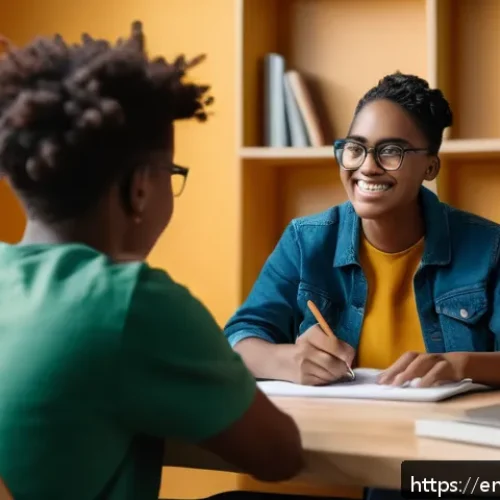
Hey everyone! As someone who’s spent years working with incredible young minds, I’ve seen firsthand how challenging yet incredibly rewarding it can be to guide the next generation of leaders.
It’s not just about giving directions anymore; it’s truly about fostering an environment where every voice is heard, and every idea contributes to something bigger and better.
Lately, with the rapid changes in how young people interact—think everything from dynamic online communities to powerful global social movements—the art of collaboration has become more crucial than ever before.
I’ve personally noticed a significant shift in what truly makes a youth leader effective today: it’s less about individual brilliance and more about the magic that happens when a team genuinely clicks and works together seamlessly.
If you’ve ever felt like your group could achieve so much more if only everyone were truly on the same page, or if you’re genuinely keen to equip your young leaders with the powerful skills to navigate complex team dynamics in this fast-paced world, then you are absolutely in the right place.
Trust me, it’s a journey that transforms not just the group, but the leader themselves too. I’m really excited to share some insights that I’ve gathered along the way, helping you unlock powerful strategies to elevate your youth leadership collaboration.
Let’s dive in and discover exactly how to empower your team for unparalleled success!
Fostering a Culture of Open Dialogue and Trust

Building strong collaborative teams, especially with young leaders, really starts with creating an environment where everyone feels safe, heard, and valued.
I’ve seen time and time again that without this foundational trust, even the most brilliant individual ideas can fall flat because people are hesitant to share or critique constructively.
It’s not just about saying “be open”; it’s about actively demonstrating through your actions that every voice has weight. This means listening intently, not just waiting for your turn to speak, and encouraging young people to truly engage with each other’s perspectives, even when they differ.
When I worked with a community youth council last year, we implemented a “no bad ideas” brainstorming session, and the sheer volume of innovative solutions that emerged was astounding, simply because everyone felt secure enough to throw anything out there.
This kind of psychological safety is the bedrock upon which genuine teamwork is built, allowing young minds to explore, experiment, and ultimately, excel together.
It takes consistent effort to nurture, but the payoff in terms of creativity and cohesion is immeasurable. Think about it – if you don’t trust your teammates, how effective can you truly be?
It’s a game-changer, and I’ve watched groups transform from hesitant individuals into dynamic forces just by focusing on this.
Creating Safe Spaces for Expression
One of the most powerful things we can do as mentors is to model and then facilitate environments where young people feel genuinely safe to express themselves without fear of judgment.
This isn’t just about setting ground rules; it’s about actively interrupting microaggressions, validating diverse viewpoints, and showing through your own vulnerability that it’s okay not to have all the answers.
I remember one workshop where a young leader was struggling to articulate her vision, and instead of pushing her, I shared a similar past experience where I felt stuck.
That small act of shared humanity broke down a wall, and soon, others felt comfortable enough to admit their own uncertainties, turning a moment of potential frustration into a shared learning experience.
It’s about building a collective understanding that mistakes are part of the process, and every contribution, no matter how small, adds value.
Building Reciprocal Trust Among Peers
Trust isn’t a one-way street; it needs to flow between peers as much as it does between leaders and their teams. Encouraging activities that foster interdependence, where success genuinely relies on everyone doing their part, can dramatically accelerate this process.
Whether it’s a team project where different members are responsible for distinct, crucial components, or a collaborative problem-solving exercise, these shared experiences forge bonds.
I’ve often used icebreakers that reveal personal strengths and weaknesses, allowing team members to see how they complement each other. For instance, knowing that one person is great at organization while another excels at creative brainstorming means they can trust each other to deliver in their respective areas, creating a more cohesive and efficient unit.
Mastering the Art of Purposeful Communication
Effective communication is truly the lifeblood of any successful team, and with young leaders, it’s about so much more than just talking. It’s about ensuring that messages are not only sent but genuinely received and understood in the way they were intended.
In today’s fast-paced world, where information zips around at light speed across various platforms, teaching our youth how to communicate with clarity, empathy, and purpose is paramount.
I’ve witnessed countless projects stall, not because of a lack of talent or good ideas, but simply because of miscommunication. Perhaps one team member assumed something was understood, or another was too shy to ask for clarification.
Helping young people develop strong active listening skills—truly hearing what others are saying, rather than just formulating their own response—is a critical component.
We also need to empower them to articulate their thoughts concisely and persuasively, whether they are presenting an idea, offering feedback, or resolving a conflict.
It’s a skill that requires practice, patience, and a willingness to adapt one’s style to different audiences and situations. Learning to differentiate between what needs a quick text and what requires a face-to-face discussion is a nuance that comes with thoughtful guidance.
Active Listening: The Unsung Hero of Collaboration
Active listening is, in my experience, one of the most powerful yet often overlooked skills in collaboration. It’s about giving your full attention, asking clarifying questions, and reflecting back what you’ve heard to ensure understanding.
I once facilitated a debate club where, instead of just arguing points, I introduced a rule: before responding, each student had to accurately summarize the previous speaker’s argument to their satisfaction.
It completely transformed their discussions, leading to deeper understanding and more nuanced arguments. This isn’t just a technique; it’s a mindset that shows respect and value for the other person’s contribution, making them feel heard and validated.
Crafting Clear and Concise Messages
In an age of information overload, the ability to communicate clearly and concisely is invaluable. Whether it’s an email, a presentation, or a quick chat, young leaders need to learn how to get their point across without unnecessary jargon or lengthy explanations.
I always encourage my students to practice the “elevator pitch” concept: can you explain your idea or concern effectively in just a few sentences? This forces them to distill their thoughts to their essence, making their communication more impactful.
We often work on structuring arguments logically and providing just enough detail to be informative without overwhelming the audience, which is a key skill in both academic and professional settings.
Empowering Voices: Distributing Leadership and Responsibility
True collaborative leadership isn’t just about one person at the helm; it’s about empowering every individual within the group to take ownership and contribute their unique strengths.
I’ve found that when young people are given genuine responsibility and the autonomy to make decisions within their roles, their engagement skyrockets, and so does their sense of accountability.
It’s a fantastic way to build confidence and develop a diverse range of leadership skills across the team. Think about a student government, for example: if only the president makes all the decisions, the other members quickly disengage.
But if committee chairs are truly empowered to lead their initiatives, manage their budgets (even if small), and report back, the entire body becomes more dynamic and effective.
My approach has always been to identify individual talents and then actively create opportunities for those talents to shine within a collaborative framework.
This means moving beyond a top-down model and embracing a more fluid, organic structure where leadership can emerge from anyone, at any time, based on the task at hand.
It creates a powerful sense of shared ownership and truly elevates the collective potential of the group.
Delegating with Purpose and Trust
Delegation isn’t just about offloading tasks; it’s about strategically assigning responsibilities that align with individual strengths and developmental goals.
When I delegate a task to a young leader, I don’t just hand it over; I explain the ‘why’ behind it, the expected outcomes, and the resources available.
It’s about showing trust in their capabilities while also providing a safety net for support. For example, assigning a shy but highly organized student to manage the logistics of an event can give them a huge confidence boost, even if they’re not front and center.
It teaches them responsibility and shows them their contribution is valued, which is far more impactful than simply telling them what to do.
Fostering Collective Ownership and Accountability
When everyone feels a stake in the outcome, accountability naturally follows. This is about moving from “my task” to “our project.” I’ve found that regularly checking in, celebrating small wins, and collectively debriefing on challenges helps reinforce this shared ownership.
When a team successfully pulls off a difficult project, it’s not just the team leader who gets the credit; it’s a collective triumph. Conversely, when things don’t go as planned, it becomes a group learning opportunity, not a blame game.
I often use peer feedback sessions where young leaders provide constructive criticism to each other, fostering a sense of mutual support and accountability that strengthens the entire group.
Navigating Conflict: Turning Discord into Discovery
Let’s be real: where there are people, there will be disagreements. This is especially true with spirited young minds, and honestly, that’s not a bad thing!
Conflict, when handled constructively, can actually be a powerful catalyst for growth and innovation within a team. My experience has shown me that rather than avoiding conflict, equipping young leaders with the skills to navigate it effectively is one of the most crucial things we can do.
It’s not about smoothing over differences; it’s about teaching them how to articulate their perspectives respectfully, actively listen to opposing viewpoints, and collaboratively seek solutions that benefit the entire group, rather than just one side.
I once worked with a group planning a fundraiser where there were strong disagreements about the theme. Instead of letting it devolve into a stalemate, we used a structured mediation approach, helping each side express their needs and fears.
What emerged wasn’t just a compromise, but a completely new, hybrid idea that was better than either of the original proposals! This process taught them that conflict isn’t the end of collaboration; it’s often the beginning of a deeper, more robust understanding and even stronger outcomes.
Teaching Constructive Conflict Resolution
The first step in turning discord into discovery is teaching practical conflict resolution techniques. This includes encouraging “I” statements to express feelings and needs without blame, practicing active listening even when emotions run high, and focusing on interests rather than just positions.
I often use role-playing scenarios to let young leaders practice these skills in a safe environment. We discuss how to identify the root cause of a disagreement, which is often deeper than the surface issue, and then work together to brainstorm multiple solutions.
It’s about empowering them to be problem-solvers, not just reactors, in challenging situations.
Mediating and Facilitating Difficult Conversations
As mentors, sometimes our role is to step in and facilitate those tougher conversations. This means creating a neutral space, setting ground rules for respectful dialogue, and ensuring everyone gets a chance to speak and be heard.
I’ve found that framing conflict as an opportunity for mutual learning and stronger team bonds can shift the entire atmosphere. My goal isn’t to solve the problem for them, but to guide them through a process where they can solve it themselves.
This might involve summarizing points of agreement and disagreement, helping them identify shared goals, and encouraging brainstorming for win-win solutions.
It builds their confidence in handling future disagreements independently.
Embracing Diversity: The Strength in Varied Perspectives
In our increasingly interconnected world, understanding and genuinely embracing diversity isn’t just a moral imperative; it’s a strategic advantage, especially for youth leaders.
When a team brings together individuals from different backgrounds, cultures, and experiences, the breadth and depth of ideas, insights, and solutions grow exponentially.
I’ve consistently observed that homogeneous groups, while sometimes faster to agree, often miss crucial perspectives and innovation that diverse teams naturally uncover.
It’s about celebrating unique viewpoints, recognizing that each person’s journey offers a distinct lens through which to view challenges and opportunities.
For youth leaders, this means actively seeking out different voices, understanding that what’s ‘normal’ for one person might be completely foreign to another, and learning to bridge those gaps with empathy and curiosity.
This isn’t just about superficial inclusion; it’s about deep integration where every individual feels their unique identity contributes significantly to the collective success.
It truly unlocks the full potential of a group when everyone feels truly seen and valued for who they are and what they bring to the table.
Valuing Unique Backgrounds and Experiences
To truly embrace diversity, we need to move beyond mere tolerance and actively value the unique backgrounds and experiences each young person brings. This means creating opportunities for them to share their stories, their cultural insights, and their personal perspectives.
I often start new group projects with a “personal insights” activity where everyone shares something unique about their background or a relevant life experience.
This helps break down stereotypes, builds empathy, and shows how different life paths lead to different strengths. It creates a rich tapestry of ideas that can be drawn upon, ensuring that solutions are more robust and inclusive.
Leveraging Different Problem-Solving Approaches

Diversity isn’t just about identity; it’s also about different ways of thinking and approaching problems. Some young leaders are analytical, others are creative, some are big-picture thinkers, and others are detail-oriented.
The magic happens when these different approaches are brought together. I always try to ensure my teams have a mix of these styles, and then I guide them in recognizing and appreciating these differences.
For instance, in a project planning session, I might assign the “big-picture” thinkers to brainstorm initial concepts, while the “detail-oriented” individuals are tasked with identifying potential challenges and refining the steps.
This ensures all angles are covered and that the final outcome is well-rounded and robust.
Leveraging Technology for Seamless Collaboration
In today’s digital age, it’s impossible to talk about effective youth leadership collaboration without acknowledging the powerful role technology plays.
Our young leaders are digital natives, and we have an incredible opportunity to leverage their familiarity with online tools to enhance teamwork, communication, and project management.
Gone are the days of relying solely on physical meetings or paper notes; modern teams thrive on platforms that allow for real-time document sharing, virtual communication, and organized task management.
I’ve personally seen how tools like shared drives, instant messaging apps, and project management software can transform a geographically dispersed group of students into a highly efficient unit, allowing them to collaborate on assignments, share ideas, and track progress, sometimes across different time zones.
Teaching young leaders how to use these tools effectively isn’t just about technical proficiency; it’s about fostering digital citizenship, cybersecurity awareness, and understanding how to maintain human connection even in a virtual space.
It’s truly about embracing these resources to amplify their collective impact and prepare them for a future where digital collaboration is the norm.
Exploring Collaborative Digital Platforms
There’s a whole world of digital tools out there designed to make teamwork easier, and introducing young leaders to them can be a game-changer. From shared document platforms where multiple people can edit in real-time, to communication apps that keep everyone in the loop, these tools break down barriers.
I often run mini-workshops on using specific platforms, focusing not just on the ‘how’ but the ‘why’ – how does this tool make our collaboration more efficient?
For example, using a shared task board can visually show who is working on what, reducing duplication and increasing accountability. It teaches them valuable skills they’ll use throughout their academic and professional lives.
Best Practices for Virtual Team Engagement
Working virtually brings unique challenges, but also incredible opportunities. It’s crucial to teach young leaders how to maintain engagement and connection in a digital environment.
This means establishing clear communication protocols – when to use chat, email, or video calls – and encouraging regular virtual check-ins that go beyond just task updates.
I also emphasize the importance of video calls for important discussions, as seeing facial expressions and body language still plays a vital role in understanding.
We discuss strategies for staying focused, minimizing distractions, and ensuring everyone has an equitable opportunity to contribute, even when not in the same room.
Measuring Impact and Celebrating Collective Success
One of the most motivating aspects of any collaborative effort, especially for young leaders, is seeing the tangible impact of their hard work and celebrating their collective achievements.
It’s not enough to just complete a project; we need to teach them how to reflect on their journey, measure their progress against established goals, and truly appreciate the power of what they’ve accomplished together.
This process reinforces their learning, builds confidence, and fosters a sense of pride in their shared endeavors. When I work with youth groups, we always build in dedicated time for debriefing sessions where we analyze what went well, what could be improved, and how their collaborative efforts contributed to the overall success.
It’s not just about the final outcome, but the journey itself and the skills they developed along the way. Publicly acknowledging their efforts, whether through a simple shout-out or a formal recognition, strengthens team bonds and inspires them to take on even bigger challenges.
It transforms individual contributions into a powerful, collective narrative of triumph, proving that together, they can achieve incredible things.
Reflecting on Group Dynamics and Outcomes
Critical reflection is a cornerstone of continuous improvement. After every major collaborative effort, I guide young leaders through a structured reflection process.
We discuss questions like: What were our biggest strengths as a team? Where did we face challenges, and how did we overcome them? How did our individual contributions impact the collective outcome?
This isn’t about finger-pointing; it’s about fostering self-awareness and understanding group dynamics. It helps them identify effective strategies they can carry forward and areas where they might need to develop further, both individually and as a team.
Celebrating Milestones and Achievements
Celebrating successes, big or small, is crucial for morale and motivation. It validates the hard work and reinforces the positive aspects of collaboration.
I make it a point to highlight specific instances of excellent teamwork, problem-solving, or innovative thinking. This could be anything from a quick acknowledgment during a meeting for successfully meeting a deadline, to a small team gathering after a major project completion.
These celebrations don’t just feel good; they serve as powerful anchors, reminding young leaders of the strength and joy that comes from working together.
It creates a positive feedback loop that encourages them to seek out more collaborative opportunities.
| Collaboration Skill | Key Behaviors | Benefits for Youth Leaders |
|---|---|---|
| Active Listening | Paraphrasing, asking clarifying questions, making eye contact. | Reduces misunderstandings, fosters empathy, strengthens relationships. |
| Clear Communication | Concise messaging, using “I” statements, adapting to audience. | Ensures ideas are understood, prevents conflict, promotes efficiency. |
| Conflict Resolution | Seeking win-win solutions, expressing needs respectfully, mediation. | Builds resilience, transforms disagreements into growth opportunities. |
| Delegation | Assigning tasks based on strengths, trusting peers, providing support. | Empowers team members, develops individual leadership, shares workload. |
| Empathy & Inclusivity | Valuing diverse perspectives, understanding different backgrounds. | Generates innovative solutions, builds a strong, respectful team culture. |
| Accountability | Taking ownership, following through on commitments, giving constructive feedback. | Ensures project completion, builds trust, fosters reliability. |
Cultivating Resilience: Learning from Setbacks and Embracing Growth
No journey, especially one involving collaborative leadership, is ever perfectly smooth. There will always be bumps in the road, unexpected challenges, and even outright setbacks.
What truly distinguishes effective youth leaders and strong collaborative teams is not the absence of failure, but their ability to bounce back, learn from those experiences, and emerge even stronger.
This is where cultivating resilience comes into play. I’ve personally seen groups falter when faced with a major obstacle, only to rise again with renewed determination because they were equipped with the mindset that setbacks are merely opportunities for growth.
It’s about reframing “failure” not as an endpoint, but as valuable data that informs future actions. As mentors, we need to guide young leaders in understanding that resilience isn’t just about grit; it’s also about effective problem-solving, leaning on their team for support, and adapting their strategies when initial plans don’t pan out.
Teaching them to analyze what went wrong without dwelling on blame, to extract lessons, and to collaboratively revise their approach is one of the most powerful gifts we can give them.
This not only builds their individual fortitude but strengthens the collective resilience of the entire team, preparing them for an unpredictable world where adaptability is key.
Analyzing Setbacks for Future Success
When things don’t go as planned, it’s a golden opportunity for learning, not for despair. I encourage young leaders to conduct “post-mortems” – a calm, objective review of what happened.
This involves asking questions like: What were the contributing factors to this setback? What assumptions did we make that proved incorrect? What could we have done differently?
The focus is always on understanding and improving, not on assigning blame. This process transforms what could be a disheartening experience into a rich learning curve, helping them develop critical thinking and problem-solving skills that are invaluable in any leadership role.
Building Adaptability and Agility in Teams
The world is constantly changing, and effective youth leadership teams need to be agile and adaptable. This means being able to pivot quickly when circumstances change, to integrate new information, and to adjust strategies on the fly.
I often introduce hypothetical scenarios to my teams that require them to think on their feet and come up with alternative plans. For example, “What if our primary funding falls through?” or “What if a key team member becomes unavailable?” These exercises build their capacity for flexible thinking and demonstrate that having a Plan B (or C!) is a sign of strength, not weakness.
It teaches them that being rigid can be a hindrance, while being flexible opens up new pathways to success.
Bringing It All Together
Whew! We’ve covered a lot of ground today, haven’t we? Looking back at my own journey, it’s clear that the foundational principles of fostering open dialogue, purposeful communication, empowering voices, navigating conflict, embracing diversity, leveraging technology, and celebrating success are truly non-negotiable for building incredible youth leadership teams. These aren’t just theoretical concepts; they are the very threads that weave together a tapestry of innovation, resilience, and genuine collective achievement. Remember, leadership isn’t just about a title; it’s about the actions we take every single day to lift others up and create an environment where everyone can thrive. Keep practicing, keep learning, and keep inspiring!
Quick Tips for Building Strong Teams
1. Always start with trust: Without a safe space, genuine collaboration won’t flourish. Make psychological safety your top priority.
2. Listen more than you speak: Active listening shows respect and ensures understanding, preventing so many avoidable missteps.
3. Delegate with purpose: Empowering others by entrusting them with meaningful responsibility builds their confidence and strengthens the team.
4. See conflict as an opportunity: Disagreements, when handled constructively, can lead to groundbreaking solutions and deeper understanding.
5. Celebrate every win: Acknowledge effort and success, big or small, to keep motivation high and reinforce the power of working together.
Key Takeaways for Collaborative Success
Ultimately, nurturing collaborative youth leadership is about creating an ecosystem where young individuals can truly flourish together. It means investing time in building robust communication channels, promoting empathy and inclusivity at every turn, and empowering each team member to contribute their unique strengths. From my experience, a team that feels safe, heard, and valued is one that will consistently exceed expectations, adapt to challenges, and drive meaningful change. It’s a continuous journey of learning and growth, but the rewards—in terms of personal development and collective impact—are absolutely priceless. So, let’s commit to building these environments for the next generation of leaders!
Frequently Asked Questions (FAQ) 📖
Q: What’s the biggest stumbling block you’ve seen in youth collaboration, and how can we really get past it?
A: Oh, this is a question I get all the time, and honestly, it boils down to two things that are deeply intertwined: communication and trust. I’ve personally walked into countless situations where brilliant young people had fantastic ideas, but they just couldn’t seem to get their message across or felt like their thoughts wouldn’t be valued.
It’s like everyone’s speaking a different language, even when they’re using the same words! In my experience, the biggest hurdle is often a lack of safe spaces where young leaders feel truly comfortable expressing themselves without fear of judgment or being shut down.
When that trust isn’t there, communication breaks down, and brilliant ideas stay bottled up. To genuinely get past this, we need to actively cultivate environments of psychological safety.
What does that look like? It means teaching and modeling active listening, where everyone isn’t just waiting for their turn to speak, but truly hearing and understanding each other.
I’ve found that setting “group agreements” at the beginning of a project, where everyone co-creates rules for how they’ll interact—like “one voice at a time” or “challenge ideas, not people”—makes a huge difference.
It’s also about empowering those quieter voices. Sometimes, a simple round-robin where everyone gets a chance to share an initial thought, or breaking into smaller discussion groups before bringing ideas to the whole team, can unlock incredible contributions.
Remember, it’s not about forcing agreement, but fostering a space where disagreement can lead to stronger, more innovative solutions, rather than just conflict.
You’d be amazed at how a little intentionality around how we talk and listen can transform a hesitant group into a powerhouse!
Q: I’m trying to get my young leaders to work together, but it often feels like pulling teeth!
A: ny practical, ‘been-there-done-that’ tips for making collaboration actually fun and effective? A2: I totally hear you! Sometimes, it can feel like you’re herding cats, right?
But what I’ve discovered is that if collaboration feels like a chore, it’s usually because the “why” isn’t clear, or the “how” isn’t engaging. The trick to making collaboration fun and effective, in my playbook, is to infuse it with genuine ownership and a sense of shared adventure.
Young people thrive when they feel their contribution is meaningful and when they’re not just following instructions, but truly leading the charge. Here’s what I’ve seen work wonders: First, ditch the idea that you have to assign every single role.
Instead, present a challenge or a vision, and then let the group self-organize or choose roles that play to their strengths. I once had a group working on a community art project, and initially, it was pretty sluggish.
But when I stepped back and let them decide how they wanted to tackle it—from brainstorming themes to delegating who would manage materials versus who would coordinate with local artists—their energy skyrocketed.
suddenly, it wasn’t my project anymore; it was theirs. Second, incorporate elements of gamification or healthy competition. Maybe different sub-teams tackle different aspects of a larger goal, with regular updates where they can “show and tell” their progress.
Celebrating even small wins with genuine enthusiasm can build incredible momentum. Lastly, and this is a big one, give them real-world problems to solve.
Nothing energizes a young leader more than knowing their collaborative efforts are making a tangible difference in their community or addressing an issue they genuinely care about.
It moves them from simply “doing group work” to “making an impact together.”
Q: Once we get a collaborative project going, how do we make sure it doesn’t fizzle out? What’s the secret to maintaining that collaborative spirit long-term, especially with young people?
A: Ah, the sustainability question! It’s one thing to ignite that initial spark, but keeping the flame burning? That’s where the real leadership magic happens.
I’ve personally seen many fantastic youth projects start with a bang, only to slowly lose steam over time. The secret, I’ve found, isn’t about constant intervention, but about building an ecosystem of continuous growth and shared responsibility.
Firstly, regular, structured reflection is paramount. It’s not just about “what went wrong,” but “what went well, and why?” and “what did we learn, and how can we apply it next time?” I like to build in dedicated “check-in” sessions, perhaps every few weeks, where the team can openly discuss progress, challenges, and what they need from each other.
This often means providing opportunities for youth to assess themselves and their peers. Secondly, you need to actively encourage peer mentorship and leadership rotation.
This prevents burnout for a few star players and ensures that leadership skills are being developed across the entire group. When young leaders see their peers stepping up and excelling, it inspires them to do the same.
I vividly recall a time when a quieter member of a student council, after being encouraged to lead a sub-committee, absolutely blossomed. That experience not only boosted their confidence but also inspired other shy members to take on more active roles.
Finally, always link their efforts back to the larger vision. Remind them of the impact they’re making, share positive feedback from stakeholders, and celebrate milestones, no matter how small.
This constant reinforcement of their collective purpose and achievements is crucial for keeping spirits high and ensuring that the collaborative spirit doesn’t just endure, but actually grows stronger over time.
It’s about building a culture where collaboration is the norm, not the exception, and where every young person feels like a valued co-owner of the journey.