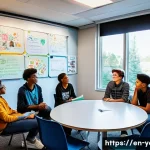
Let’s be real for a moment. Guiding young people through practical leadership training can often feel like navigating a maze blindfolded, right? I’ve personally seen so many aspiring youth leaders struggle when theory clashes with the unpredictable reality of group dynamics, unexpected crises, or simply trying to get everyone on the same page.

It’s not just about teaching them the ‘what,’ but truly preparing them for the ‘how’ when things get messy. The world our youth are stepping into is changing at lightning speed, far faster than any textbook can keep up with.
We’re talking about a landscape where adaptability, critical thinking, and genuine problem-solving aren’t just buzzwords, but absolutely essential survival skills.
I genuinely believe that nurturing these capacities, especially through hands-on, real-world scenarios, is where the magic truly happens. Forget rote memorization; it’s about giving them the tools and the confidence to innovate, bounce back from setbacks, and lead with empathy, even when they’re still finding their own footing.
It’s not always easy to balance being a mentor and allowing them to make their own mistakes, but it’s crucial for their growth. This isn’t just about shaping individual careers; it’s about cultivating the next generation of community builders and innovators who can tackle global challenges head-on.
From fostering entrepreneurial mindsets to leveraging the latest tech for collaborative solutions, the emphasis now is on practical application and creative solutions.
We need leaders who can not only solve problems but also inspire others to join them on that journey. If you’ve ever wondered how to truly empower young leaders to confidently face whatever comes their way, you’re in the right place.
Let’s dive in deeper below and find out exactly how to make that happen!
Shifting from Theory to Real-World Impact
Bridging the Knowledge-Action Gap
You know, it’s one thing to read about leadership in a textbook, but it’s a completely different ballgame when you’re actually standing in front of a group of energetic, sometimes chaotic, young people trying to put those theories into practice. I’ve been there, frantically flipping through mental notes, only to realize that the ‘perfect’ theoretical solution just doesn’t quite fit the unpredictable reality of human dynamics. It’s like learning to swim by reading a book; you truly grasp it only when you dive into the water. My own journey with aspiring young leaders has shown me time and again that while foundational knowledge is crucial, the real transformation happens when they’re thrown into a scenario that demands quick thinking, empathy, and genuine problem-solving. We need to move beyond abstract concepts and create environments where they can actually get their hands dirty, make mistakes, and learn to pivot without losing their stride. This isn’t just about making them better leaders; it’s about making them more resilient, adaptable humans. We’re preparing them not for a static world, but for one that’s constantly evolving, demanding that they evolve right along with it. It’s a messy, beautiful process that no lecture alone can ever fully capture.
The Unpredictable Reality of Youth Group Dynamics
Speaking of getting hands-on, anyone who’s ever worked with youth groups knows that they come with their own unique brand of beautiful chaos. It’s never a straight line from problem to solution; there are detours, disagreements, and unexpected bursts of creativity. I once led a summer camp where a seemingly simple task – building a small shelter – turned into an epic saga of miscommunication and design clashes. In a textbook, teamwork is linear. In reality? It’s a zig-zag. But here’s the kicker: it was in navigating that very chaos that the true leaders emerged. They weren’t the ones who knew all the answers, but the ones who could listen, mediate, and inspire their peers to keep going, even when frustrations ran high. My own experiences have cemented my belief that exposing young people to these ‘messy’ realities, where plans go awry and personalities clash, is precisely where their leadership muscles get the most robust workout. We’re not just teaching them principles; we’re giving them a lived experience of what it truly means to lead through ambiguity and collaboration.
Cultivating Essential 21st-Century Leadership Skills
Beyond the Textbook: Real-World Competencies
The world today is a whirlwind, isn’t it? What counted as essential leadership a decade ago might feel totally outdated now. I’ve noticed that the real game-changers among young leaders aren’t just the ones who can command a room, but those who can adapt on the fly, think critically about complex issues, and genuinely solve problems, often with limited resources. Forget memorizing facts; it’s about fostering a mindset that embraces curiosity and continuous learning. When I started out, I thought leadership was all about having all the answers. Boy, was I wrong! It’s actually about knowing how to ask the right questions and empowering your team to find those answers collectively. We’re talking about nurturing skills like creative thinking, emotional intelligence, and digital literacy – competencies that aren’t usually covered in traditional leadership curricula. My experience has shown me that when young people are given the space to experiment with new technologies for collaboration or to brainstorm truly out-of-the-box solutions for community issues, their natural leadership qualities shine through in ways you wouldn’t expect. It’s less about teaching them a specific skill and more about developing an intrinsic drive to learn and grow, no matter what challenges come their way.
Developing Adaptive and Critical Thinking
In our rapidly changing world, the ability to adapt and think critically isn’t just a bonus; it’s a superpower. I’ve personally seen young leaders thrive when faced with unexpected hurdles, not because they had all the answers, but because they knew how to break down a problem, analyze different angles, and pivot their strategy. It’s about teaching them how to think, not what to think. One memorable instance involved a group planning a fundraiser where their chosen venue suddenly became unavailable. Instead of giving up, they collectively brainstormed alternative locations, creatively repurposed existing resources, and even learned to negotiate with new vendors on the fly. That kind of real-time, high-stakes problem-solving built more critical thinking skills than any classroom exercise ever could. It’s about fostering an environment where curiosity is celebrated, where asking “why?” and “what if?” is encouraged, and where the process of discovery is valued just as much as the final outcome. We’re training minds to be agile, resourceful, and ever-ready to tackle the next curveball life throws their way.
The Art of Mentoring: Guiding Without Directing
The Delicate Balance of Support and Autonomy
If there’s one thing I’ve learned about mentoring young leaders, it’s this: sometimes, the hardest thing to do is absolutely nothing. It goes against every instinct to jump in and “fix” things when you see someone struggling. But I’ve found that true growth happens when you allow them to wrestle with challenges, even if it means watching them stumble a bit. My own mentors weren’t the ones who gave me all the answers; they were the ones who nudged me in the right direction, asked provocative questions, and then stepped back, trusting me to find my own path. It’s a delicate dance, balancing support with independence. We want to empower them, not enable dependency. This means creating a safe space where making mistakes isn’t just tolerated, but actually celebrated as a vital part of the learning process. I vividly remember a time when a group of my mentees completely botched a project pitch. Instead of lecturing them, I helped them debrief, asking “What did you learn?” and “How will you approach it differently next time?” The insights they gained from that “failure” were far more profound than any perfectly executed success could have offered. It’s about being a compass, not a map – helping them find their true north without dictating the exact route. This approach builds confidence, fosters self-reliance, and ultimately, shapes leaders who can stand on their own two feet, ready for anything.
Empowering Through Strategic Questioning
You know, often the best advice isn’t given, it’s drawn out. Instead of telling young leaders what to do, I’ve found immense power in asking them the right questions. Questions that challenge their assumptions, broaden their perspective, and push them to think deeper about their own solutions. It’s not about tricking them, but genuinely engaging their critical faculties. For example, when a mentee comes to me with a problem, instead of offering an immediate fix, I might ask, “What have you considered so far?” or “What are the potential ripple effects of that decision?” This subtle shift from advising to inquiring transforms the mentoring dynamic. It makes them the primary problem-solver, with you as their sounding board. I once worked with a young man struggling to delegate tasks effectively. Rather than just telling him to assign roles, I asked him to list the strengths of each team member and then consider how those strengths could be best utilized for specific tasks. The change was remarkable! He not only delegated more efficiently but also developed a deeper appreciation for his team’s individual talents. This method builds self-efficacy and internalizes the problem-solving process, making them more capable and confident leaders in the long run.
Building Resilience and Embracing Failure
Turning Setbacks into Stepping Stones
Let’s be honest, failure stings. No one likes to mess up. But in the real world of leadership, setbacks aren’t just possibilities; they’re guaranteed. I’ve seen countless promising young leaders get completely derailed by their first major flop, simply because they weren’t taught how to pick themselves back up. It’s heartbreaking, but it’s also a powerful lesson that we, as mentors, need to impart. My personal philosophy has always been that resilience isn’t about avoiding failure, but about learning to bounce back stronger, smarter, and with a renewed sense of purpose. It’s about reframing those “oops” moments as invaluable learning opportunities. Think about it: every successful entrepreneur, every impactful community organizer, every groundbreaking innovator has a trail of failed attempts behind them. They didn’t quit; they learned, adapted, and pushed forward. I always tell the young people I work with, “If you’re not failing occasionally, you’re not pushing your boundaries hard enough.” It’s a crucial mindset shift that we need to actively cultivate. This means celebrating the effort, acknowledging the learning, and helping them develop coping mechanisms and problem-solving strategies when things don’t go according to plan. It’s tough love, sometimes, but it’s the kind of love that truly prepares them for the inevitable bumps in the road, turning potential breakdowns into powerful breakthroughs.
The Courage to Try Again (and Again)
I genuinely believe that one of the most vital lessons we can instill in young leaders is the sheer courage to try again, even after things have gone sideways. It’s not about being fearless; it’s about acting in spite of the fear of another misstep. I recall a student who had poured weeks into organizing a school event, only for it to rain heavily on the day, significantly impacting attendance. She was devastated, understandably. My role wasn’t to sugarcoat it, but to help her process the disappointment, analyze what was within her control, and then, crucially, encourage her to channel that experience into planning an even better event next time. Fast forward six months, and her second attempt was a resounding success, largely because she’d incorporated all the lessons learned from the first. That triumph wasn’t just about the event itself; it was about her internal transformation, her development of an almost unbreakable spirit. We need to create environments where ‘giving up’ isn’t an option, but ‘revising the strategy’ is. This means celebrating their persistence and their willingness to step back into the arena, ready to learn and grow from every experience, good or bad.
Innovative Approaches to Youth Leadership Development
Beyond Traditional Classroom Models
If we’re still using the same leadership training models from twenty years ago, we’re doing our youth a disservice. The landscape has changed so dramatically, and our methods need to keep pace, if not anticipate the future. I’ve always been a big believer in throwing out the old playbook and experimenting with fresh, engaging ways to ignite that leadership spark. We’re talking about moving beyond lectures and dry workshops to immersive experiences, gamified challenges, and real-world projects that have tangible outcomes. For example, instead of just talking about community service, why not have youth groups design and implement their own local initiatives, complete with budget management, stakeholder engagement, and measurable impact goals? My own journey has shown me that when young people are given genuine ownership over a project, their motivation skyrockets, and their creativity knows no bounds. We could leverage virtual reality for simulation-based training, allowing them to practice difficult conversations or crisis management in a safe, controlled environment. Or what about “reverse mentoring,” where young leaders mentor seasoned professionals on digital trends or new perspectives? It’s all about making leadership relevant, exciting, and deeply personal. The goal isn’t just to teach them leadership skills, but to inspire them to become lifelong innovators and change-makers, constantly seeking new and better ways to make a difference in the world around them.
Leveraging Technology for Enhanced Learning
Let’s be real, today’s youth are digital natives. Trying to teach them leadership without integrating technology would be like teaching swimming without water. I’ve found that leveraging digital tools can dramatically amplify the effectiveness and engagement of leadership training. Think about it: collaborative platforms like Trello or Asana for project management, video conferencing for global team meetings, or even creating short-form content for social media campaigns to advocate for causes they care about. I once guided a group of high schoolers who used a simple video editing app to create powerful PSAs about local food insecurity, which ended up garnering significant community support. The skills they honed – scriptwriting, visual storytelling, digital marketing – were invaluable leadership lessons disguised as tech exploration. We can also explore gamification, using interactive online simulations to present ethical dilemmas or strategic challenges in a fun, competitive format. It’s about meeting them where they are, speaking their language, and turning the very tools they use daily into powerful instruments for leadership development. This not only makes learning more engaging but also equips them with practical, in-demand skills for the modern world.
In thinking about innovative ways to develop leadership, it’s clear that the methods we employ directly impact the outcomes. Here’s a quick look at some approaches that have shown incredible promise in fostering tomorrow’s leaders:

| Innovative Approach | Description | Key Benefit for Youth Leaders |
|---|---|---|
| Immersive Simulations | Engaging in role-playing complex scenarios, often using technologies like VR, to practice decision-making in a controlled, safe environment. | Develops quick decision-making under pressure, crisis management skills, and strategic thinking without real-world consequences. |
| Social Entrepreneurship Projects | Youth groups design, plan, and implement their own ventures or initiatives aimed at solving genuine community or social problems. | Fosters innovation, resourcefulness, project management, ethical leadership, and a deep understanding of community impact. |
| Reverse Mentoring | Young leaders take on the role of mentors for experienced professionals, sharing insights on new technologies, social trends, or fresh perspectives. | Builds immense confidence, enhances communication skills, validates their knowledge, and broadens perspectives for both parties involved. |
| Gamified Challenges | Integrating game-like elements and competitive structures into learning activities to make leadership development more engaging and interactive. | Increases participation and motivation, develops problem-solving skills under time constraints, and encourages strategic collaboration. |
These dynamic methods push beyond passive learning, ensuring that young leaders are not just consumers of information but active creators of their own growth and impact.
Empowering Youth for Community and Global Action
From Local Impact to Global Citizenship
It’s easy to get caught up in individual skill development, but let’s not forget the bigger picture: we’re raising future citizens of the world. My passion has always been about showing young people how their individual leadership capacity can translate into tangible, positive change, not just in their immediate circles, but in their communities and on a global scale. It’s about helping them see the interconnectedness of issues and understanding that their voice truly matters. I’ve witnessed firsthand the incredible impact a group of determined young leaders can have when they tackle local issues, whether it’s organizing a recycling drive, advocating for mental health resources, or setting up a mentorship program for younger students. These aren’t just “feel-good” projects; they are foundational experiences that teach them the complexities of systemic change, collaboration, and ethical decision-making. We need to expose them to global challenges – climate change, social injustice, digital divides – and empower them with the tools and confidence to contribute to solutions. It’s about nurturing a sense of global citizenship, showing them how their leadership in a school club can eventually translate into advocating for human rights on an international platform. When they understand the power of collective action and their role within it, that’s when their leadership truly takes flight, making a ripple effect that extends far beyond their immediate reach.
Fostering Social Entrepreneurship and Advocacy
Beyond traditional community service, I’m a huge advocate for fostering a spirit of social entrepreneurship and advocacy in young leaders. It’s about teaching them that they don’t have to wait for someone else to solve problems; they can be the change-makers themselves. I’ve seen incredible initiatives born from this mindset, from students developing apps to connect local food banks with surplus produce, to others creating peer support networks for mental health awareness in their schools. These projects aren’t just about charity; they teach the intricacies of developing a sustainable model, securing resources, marketing their cause, and building partnerships. One group I worked with developed a campaign to increase voter registration among eligible young people, going door-to-door and using social media to great effect. Their passion was infectious, and their strategic thinking was top-notch. These experiences provide invaluable lessons in civic engagement, persuasive communication, and understanding complex social systems. When young people realize they have the power to not only identify problems but also to innovate solutions and advocate for them effectively, that’s when their leadership transforms from theoretical concept to a living, breathing force for good.
Measuring Success Beyond the Scorecard
Redefining What “Winning” Truly Means
In a world obsessed with metrics and quantifiable results, it’s tempting to reduce leadership development to a checklist of completed tasks or a series of grades. But my experience has taught me that true success in youth leadership is far more nuanced, more deeply embedded in the less tangible aspects of personal growth and impact. How do you measure a surge in confidence, a newfound sense of empathy, or the quiet determination to try again after a stumble? These are the real indicators of successful leadership development, and they rarely show up on a standardized report card. We need to shift our focus from just assessing what they did to understanding who they are becoming. This means embracing qualitative feedback, peer evaluations, self-reflection journals, and open-ended discussions about their learning journeys. For example, instead of just looking at the attendance numbers for a community event they organized, let’s dig deeper: What challenges did they overcome? How did they resolve conflicts within their team? What personal insights did they gain about collaboration and impact? It’s about telling the story of their growth, not just tallying up achievements. I believe that by focusing on these holistic measures, we not only gain a more accurate picture of their development but also encourage a healthier, more growth-oriented approach to leadership that values the journey as much as the destination. It’s about celebrating the small victories and the significant leaps of faith that truly define their path.
Holistic Assessment for Authentic Growth
To truly understand the impact of our leadership training, we need to move beyond simple checklists and embrace a more holistic approach to assessment. This means looking at the full spectrum of a young person’s development, not just their public successes. I’ve found that tools like reflective journaling, where they articulate their challenges, breakthroughs, and personal feelings, offer incredible insights that a formal evaluation simply can’t capture. Peer feedback, structured to be constructive and empathetic, also provides valuable perspective on how they’re perceived as team members. Moreover, one-on-one coaching conversations where they feel safe to be vulnerable about their struggles are absolutely critical. It’s about fostering an environment where self-awareness is as prized as outward achievement. When we encourage them to critically self-assess, to celebrate their effort as much as their outcome, we’re not just evaluating their leadership; we’re teaching them valuable life skills in introspection and continuous improvement. This comprehensive view helps us, as mentors, tailor our support more effectively and helps the young leaders themselves recognize their own incredible progress, even in areas that might not be immediately obvious.
Concluding Thoughts
Well, we’ve covered a lot of ground today, haven’t we? It’s truly amazing to see how far we’ve come in understanding what it really takes to nurture the next generation of leaders. From the unpredictable realities of youth group dynamics to the innovative ways we can leverage technology, and even the subtle art of guiding without directing, it’s clear that leadership development isn’t a one-size-fits-all textbook approach. It’s an evolving, deeply human process that demands our active engagement, empathy, and a willingness to embrace the messy, beautiful journey of growth. I hope my experiences and insights have resonated with you, sparking new ideas and reaffirming your own dedication to empowering young people.
Useful Information to Know
1. Mentorship is paramount: Connecting young people with experienced guides significantly boosts their self-confidence and self-esteem, making them more capable of leading and adapting to challenges. A strong, positive mentor-mentee relationship, built on open communication and trust, is the cornerstone of effective guidance.
2. Hands-on experience triumphs theory: Providing opportunities for young individuals to take on real responsibilities, whether in community projects or school initiatives, is crucial for developing practical skills like problem-solving and decision-making. Experiential learning allows them to apply skills in dynamic, real-world scenarios, fostering resilience and adaptability.
3. Technology amplifies impact: Leveraging digital platforms for virtual workshops, global networking, and collaborative projects enhances accessibility and engagement in leadership training. Tools like video editing apps or project management software can turn everyday tech use into powerful leadership skill development.
4. Resilience is a learned superpower: Actively cultivating a mindset that views setbacks as learning opportunities is vital. Encouraging young leaders to analyze failures, develop coping mechanisms, and persistently try again builds an almost unbreakable spirit essential for long-term success.
5. Holistic development matters most: True success extends beyond quantifiable metrics; it’s about fostering self-awareness, emotional intelligence, and a sense of global citizenship. A holistic approach that values personal growth, critical thinking, and empathy prepares them to make a positive impact far beyond their immediate reach.
Key Takeaways
What I really want you to walk away with today is this: fostering youth leadership isn’t just about teaching skills; it’s about nurturing a mindset of continuous growth, resilience, and compassionate action. My journey has shown me that giving young people genuine opportunities to lead, embracing their ideas—even the chaotic ones—and providing unwavering support, especially when they stumble, is how we truly empower them. Remember, our role isn’t to provide all the answers, but to ask the right questions, celebrate their unique perspectives, and equip them with the confidence to navigate an ever-changing world. The future belongs to these incredible young leaders, and by investing in their authentic development, we’re building a brighter, more innovative tomorrow for everyone. Let’s keep inspiring them to be the change-makers we know they can be.
Frequently Asked Questions (FAQ) 📖
Q: So many leadership programs feel a bit… fluffy, you know?
A: ll theory and no real-world grit. How can we truly make practical leadership training stick with young people when the world is constantly throwing curveballs?
A1: Oh, I totally get where you’re coming from! It’s one of my biggest frustrations with traditional approaches. I’ve personally seen so many brilliant young minds glaze over during endless lectures.
The secret, I’ve found, is to dive headfirst into what I call “scrappy simulations” and real-world micro-projects. Forget the textbook; let’s give them a real problem to solve, maybe something that genuinely impacts their school or local community, even if it’s a small initiative.
For instance, instead of talking about conflict resolution, I once had a group design and mediate a ‘fair play’ agreement for their school’s recreational sports league.
They had to interview peers, understand different perspectives, and come up with rules everyone could agree on. It wasn’t perfect, but the learning curve was steep, and the engagement was off the charts because it mattered to them.
It’s about letting them feel the weight of decision-making, the thrill of a small win, and the sting of a misstep, all within a safe, guided environment.
That’s where adaptability and critical thinking aren’t just buzzwords, but muscle memory they build.
Q: The world our youth are entering is changing so fast. What are the absolute non-negotiable, essential skills young leaders need to truly thrive, not just survive, in this whirlwind?
A: You’ve hit the nail on the head! It’s less about memorizing facts and more about developing a robust internal toolkit. From my vantage point, having worked with countless emerging leaders, the top three are hands-down: radical adaptability, empathetic problem-solving, and a growth mindset that genuinely embraces failure.
Think about it – what’s relevant today might be obsolete tomorrow. So, radical adaptability isn’t just about coping with change; it’s about seeing change as an opportunity to innovate, to pivot, to learn something new on the fly.
Empathetic problem-solving means truly understanding the human element behind any challenge, connecting with people’s needs and emotions before jumping to solutions.
It’s the difference between a boss and a leader. And that growth mindset? It’s the resilience to pick yourself up when things don’t go as planned, to analyze what went wrong, and to come back even stronger.
I’ve watched young entrepreneurs bounce back from a failed product launch not with despair, but with a renewed fire to refine their idea because they saw it as a learning experience, not an ending.
These aren’t just professional skills; they’re life skills that empower them to lead with confidence and kindness.
Q: It’s one thing to teach leadership, but how do we keep young people motivated and prevent them from getting completely disheartened when things inevitably go sideways, which they always do?
A: Ah, the moment of truth! We all know that setbacks are part of the journey, but for young leaders, they can feel monumental, right? I’ve found that the key lies in three areas: intentional debriefing, celebrating effort over just outcomes, and cultivating a robust mentorship network.
When a project hits a snag, instead of letting them dwell on the ‘failure,’ we immediately pivot to a ‘what did we learn?’ session. It’s not about blame; it’s about collective analysis and strategy.
I once had a team whose fundraising event completely flopped due to unexpected bad weather. They were crushed. Instead of letting them stew, we grabbed some pizza and broke down every step – what was in their control, what wasn’t, and what they’d do differently next time.
We then highlighted the incredible teamwork and perseverance they showed despite the outcome. Secondly, it’s vital to acknowledge the sheer effort and bravery it takes to even try.
Not every swing will be a home run, but every swing builds skill. Lastly, connecting them with a diverse group of mentors who have faced their own share of disappointments, and openly share those stories, is invaluable.
Hearing “I’ve been there, and here’s how I got through it” can be the most powerful motivator, turning a moment of doubt into a renewed sense of purpose.
It’s about building a culture where resilience is the superpower, and every stumble is a stepping stone.